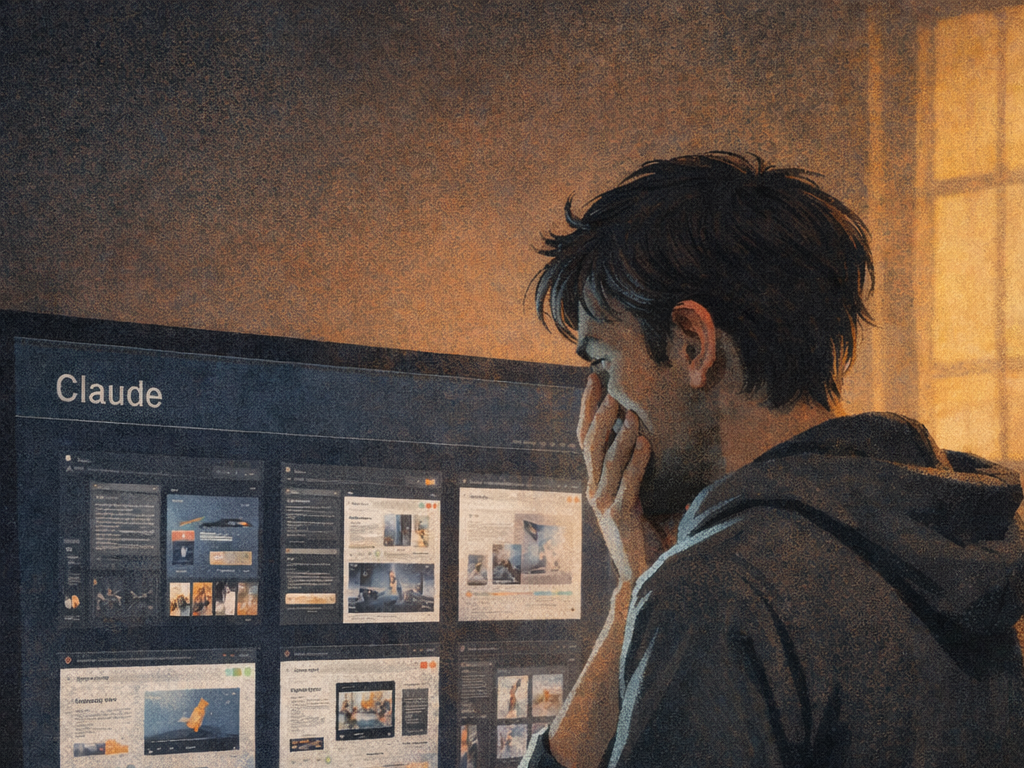
What Claude Design actually is
Anthropic shipped Claude Design on Friday. If you're on one of the higher plans, you can access it right now in research preview, and you should. It's really good.
The easiest way to describe it: Claude Design is to design what vibe coding is to coding. You talk to it. It spins up a canvas with websites, screens, whatever you want, and you iterate with it the same way you iterate with Claude Code. Same loop, different medium.
I gave it a real test. I have a design system I've been using for personal projects, so I uploaded the code and pointed it at a side project I've been meaning to start, a chat interface. Nothing groundbreaking as a project. But what it did with it was.
It took my design system and turned it into a UI kit. It walked me through the brand, the tokens, the patterns I'd already defined, and asked for feedback along the way. Then it built the flow.
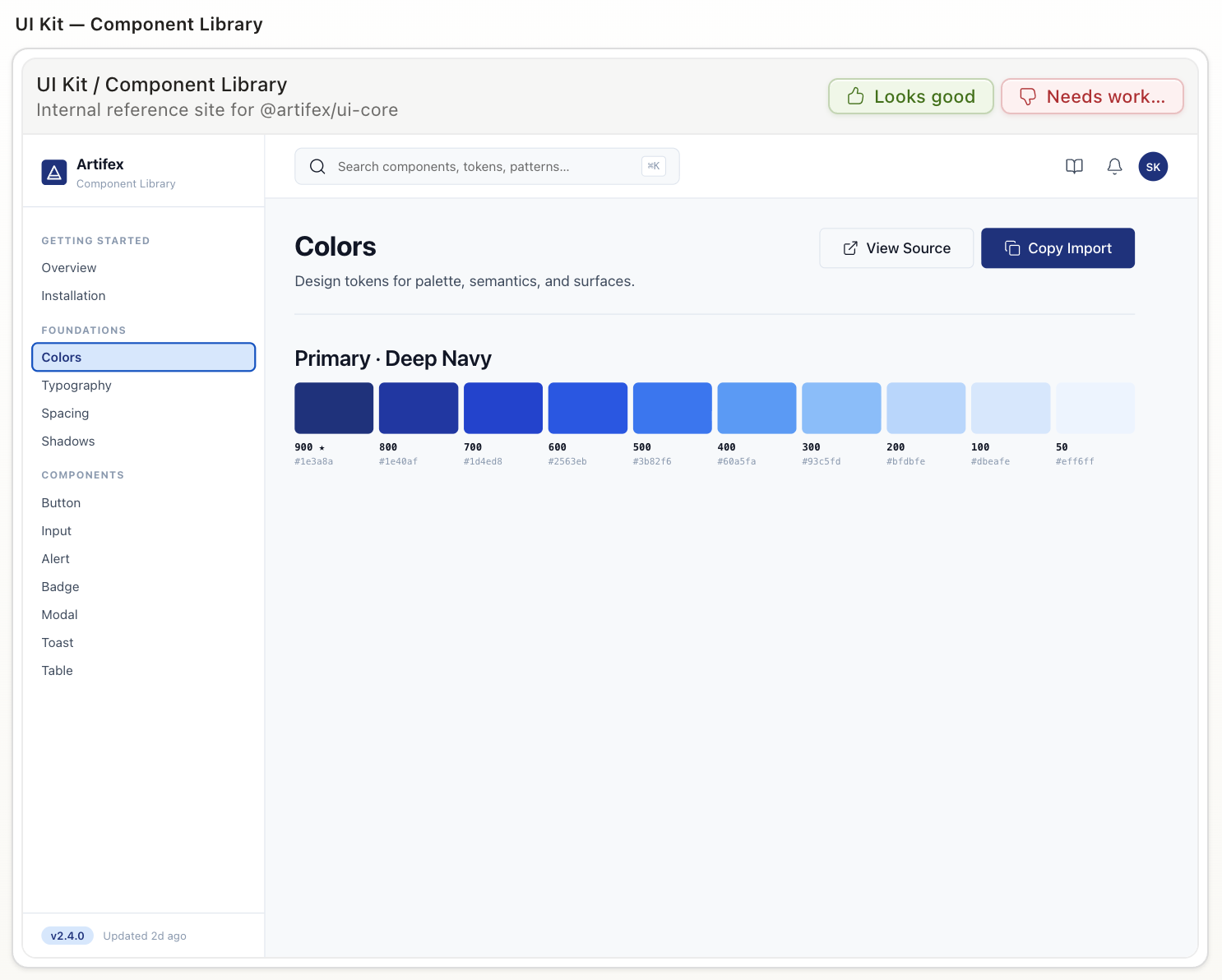
When I wanted to experiment with a couple of different views, I just said so and it produced them side by side. The part that got me was the commenting. Same way you'd drop a comment on a specific chart in a PowerPoint, I could point at a specific element in the design and say move this here, make it look like that. And it would. In real time. It felt like vibe coding feels. That same tight iteration loop, just on a canvas instead of a codebase.
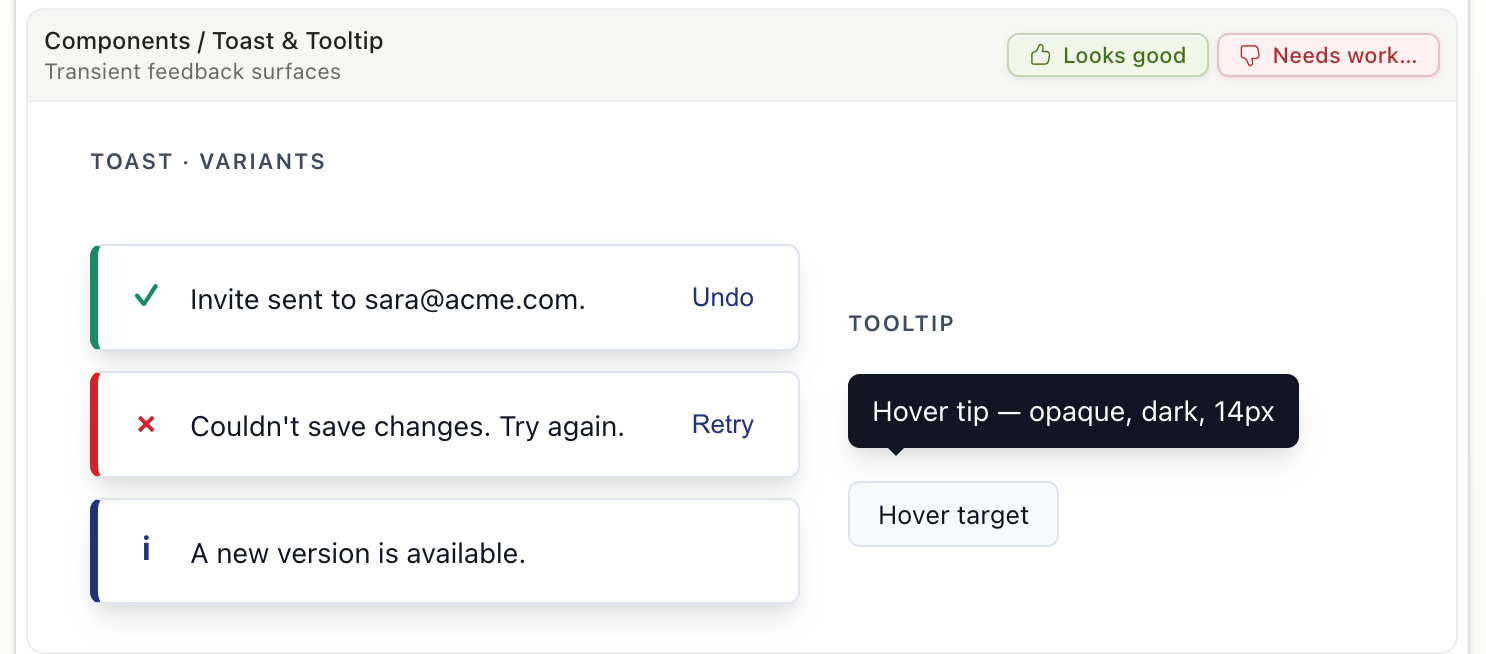
And then it exports. To Claude Code, or down to files you can pull into whatever you're already doing. The boundary between design and build is basically gone.
So what's happening here is the same thing I wrote about last week. The supply side just shifted out again. More people are about to get dangerous with design, the same way they've been getting dangerous with code. And the interesting structural piece is what's underneath: Claude Design is built on Claude Code. Anthropic built the building engine, and now they're abstracting new layers on top of it. Design is one. It won't be the last.
And there's a second thing worth mentioning, even if it's really its own piece. When design gets cheap, taste is the bottleneck. Pasquale D'Silva made this case recently and I think he's right. The same way an engineer's edge moves toward understanding how systems actually fit together when code gets cheap, a designer's edge moves toward UX research, judgment, and knowing what's worth building in the first place. More on that another time.
And then I looked at how it shipped
The competitive drive for foundation model companies to expand into adjacent categories isn't a surprise. Anthropic has shipped legal capabilities, spreadsheets, a browsing agent. The playbook is clear. Build the model, then build up the stack. Everyone watching knows this is the move.
What I didn't know, what most people didn't know, was how Claude Design actually got here.
Here's the timeline.
Three days from the board seat to the competing product.
Put yourself in the room at Figma. Your board member spent the last year with access to your strategy, your roadmap, your customer insights, your thinking about where AI fits into your product. He resigns the day the news breaks that his company is about to ship something that directly threatens yours. Seventy-two hours later, it's live.
That's not a clean exit. That's letting the fox into the henhouse and watching him walk out with the hens.
I'm not a lawyer. I don't know what fiduciary duty looks like in a situation like this, and I'm not going to pretend the timing alone proves intent. Maybe the wall between the board seat and the product team was real. Maybe the line in the filing saying his resignation was "not due to any disagreement with Figma on any matter related to its operations, policies, or practices" is true in some narrow technical sense. Maybe.
But the optics aren't ambiguous. And at a certain point, when a company's behavior keeps looking like something, you have to take the pattern seriously instead of the press release.
The gap between the message and the move
Anthropic has spent the last two years positioning itself as the ethical one. The careful lab. The adults in the room. When OpenAI launched a ChatGPT voice that sounded so much like Scarlett Johansson she accused them of copying her, Anthropic stayed quiet and shipped. When the Pentagon wanted AI tools without guardrails, OpenAI said yes and Anthropic pushed back. When they ran Super Bowl ads in February, the pitch was that Claude would stay ad-free while OpenAI was stuffing ads into ChatGPT. The posture was "we're the ones who won't compromise the product for commercial reasons." That positioning is real, and a lot of us, me included, have given them credit for it.
And then the Chief Product Officer walks out of a board meeting and into a competing product launch in 72 hours.
I'm not going to tell you Anthropic is an evil company. I don't think that's true and I don't think it's useful. What I think is more interesting, and more honest, is this: the pressure on these companies is so enormous that the ethical positioning bends when it meets a big enough commercial opportunity. Frontier AI generates that kind of pressure constantly. Every adjacent category is going to be a Figma situation eventually. Design. Spreadsheets. Legal. Analytics. The whole stack of work people do on a screen. The ethical posture gets tested over and over, and the Krieger move is one data point on how it holds up under load.
I remember an MBA case study about Google that resonates. Google launched a censored search engine in China in 2006, stayed four years, and only pulled out after a cyberattack on Gmail accounts of Chinese dissidents. "Don't be evil" didn't stop them from going in.
That's the pattern I think we're watching again. The ethics aren't fake. They're real constraints, most of the time. But "most of the time" is doing a lot of work in that sentence. When the market is big enough, or the competitive threat is urgent enough, the posture flexes. And the bigger the company gets, the more often the posture has to flex.
So the point isn't that Anthropic is evil or that their ethics are theater. The point is that they're a company that wants to win the future, and they'll do what winning requires.
The builder's tension
For most people, none of this matters much. You're going to use Claude the same way you use Google, Meta, Amazon. The tools are too good to avoid and the alternatives aren't better. I get it. I'm in that group too, for the things I use Claude for as a consumer.
But if you're a builder, this is a different conversation.
Claude just shifted the supply side for design the same way it did for code. The whole premise of getting in now, of being one of the people taking advantage of the collapsed cost of building, is that you're building on top of this stack. You're using Claude Code. You're using Claude Design. You're using the API. Your moat, whatever it is, sits on top of infrastructure owned by a company that just demonstrated how it handles partners whose businesses overlap with its ambitions.
The old deal with a platform was roughly this. You build something on top of it. If it gets big enough, the platform either leaves you alone, acquires you, or competes with you in a way that's at least slow enough to see coming. Acquisitions were often the exit. The platform had reasons to buy instead of build: integration cost, team quality, time to market, regulatory optics.
That deal might not hold anymore. When the platform is the builder, when Claude Code is literally the engine underneath Claude Design, the cost to build a competing version of whatever you made is a conversation with the same AI you're using. The "cheaper to buy than build" logic that protected a lot of startups for a lot of years doesn't apply the same way when building is this cheap for the platform itself.
So the tension is real. You're building on the best tools available. You probably should be. But you're also building on a platform that has every incentive to eat the category you're trying to own, and a demonstrated willingness to do it to partners it had deeper obligations to than it has to you.
I don't have a clean answer for this. I'm not going to tell you not to build on Claude, because I'm going to keep building on Claude. What I'd say is: build the parts that don't depend on the platform staying out of your lane. Own the customer relationship. Own the domain expertise. Own the distribution.
Where this leaves me
Claude Design is excellent. I'm going to use it. I'm going to keep using Claude Code. I'll probably end up using whatever they ship next, because their models are the best and the tooling is the best and pretending otherwise to make a point would be dishonest.
But I'm not going to put the wool back on. The company that made these tools just told me who they are, and I heard them.
Know who you're dealing with.